Similarweb’s AI Visibility Data, using January 2026 category benchmarks, puts leaders from 15.89% in Finance, where Chase led, to 54.38% in Consumer Electronics, where Apple led. A good AI visibility score is a relative share-of-voice measure, not a fixed industry grade. AI search rewards category position, prompt fit, and source credibility, not a universal scorecard.
What is considered a good AI visibility score, and how do different platforms benchmark brand performance in AI search?
A good AI visibility score is the share of relevant AI answers that include your brand, relative to the competitors your buyers actually compare. In Similarweb’s January 2026 data, strong competitive performance in most sectors sits in the 7% to 20% range, while anything below 5% signals effective absence from AI-generated recommendations.
Different platforms benchmark that performance in different ways. Some count brand mentions, some count citations, and some blend both into a percentage or score out of 100. That means a brand can look healthy in Perplexity, quiet in ChatGPT, and invisible in Google AI Overviews, all on the same topic. The right comparison is against the same prompt set, the same category, and the same competitor list.
How do you benchmark AI visibility without mixing up engines?
Build the same prompt set across every engine
Benchmarking starts with prompt discipline. Use the same category, comparison, and buying-intent prompts across ChatGPT, Perplexity, Gemini, Google AI Overviews, and Google AI Mode, then record whether your brand appears, whether it is cited, and whether the answer is favorable. There is no universal benchmark to chase, so the closest competitors matter more than a vanity score.
The reason is model behavior. Perplexity may surface a brand consistently for certain prompt types while ChatGPT barely mentions it, because each system weights authority and source material differently. Similarweb’s AI Search Intelligence and Gen AI Intelligence track visibility per LLM and per topic cluster instead of pretending one score means the same thing everywhere.
Weight citations more than mentions when intent is commercial
Not every appearance has equal value. A plain mention in an informational answer is weaker than a citation in a comparison or vendor-selection prompt, so the scorecard should weight citations above mentions when the buyer is close to a decision. That is the cleanest way to separate awareness from proof.
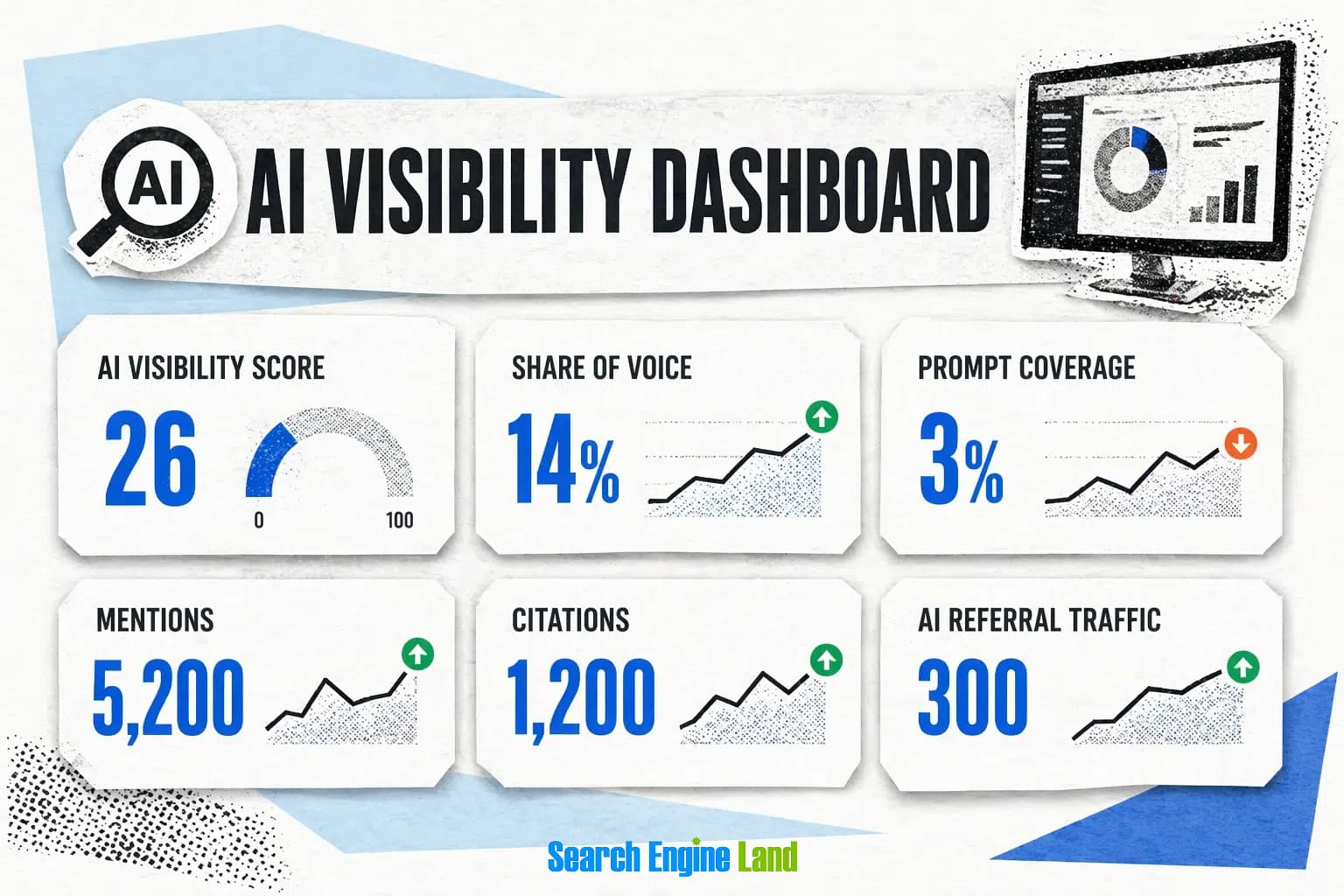
Frase measures AI visibility as a percentage of tracked prompts in which the brand appears, and its example is simple: 85% means the brand shows up in 85% of prompts being tracked. That is useful as a tracking format, but not as a universal benchmark. HubSpot says teams are still stitching together data from ChatGPT, Perplexity, and Gemini while struggling with inconsistent standards and weak pipeline attribution.
Which tools actually benchmark brand performance in AI search?
What Similarweb measures first
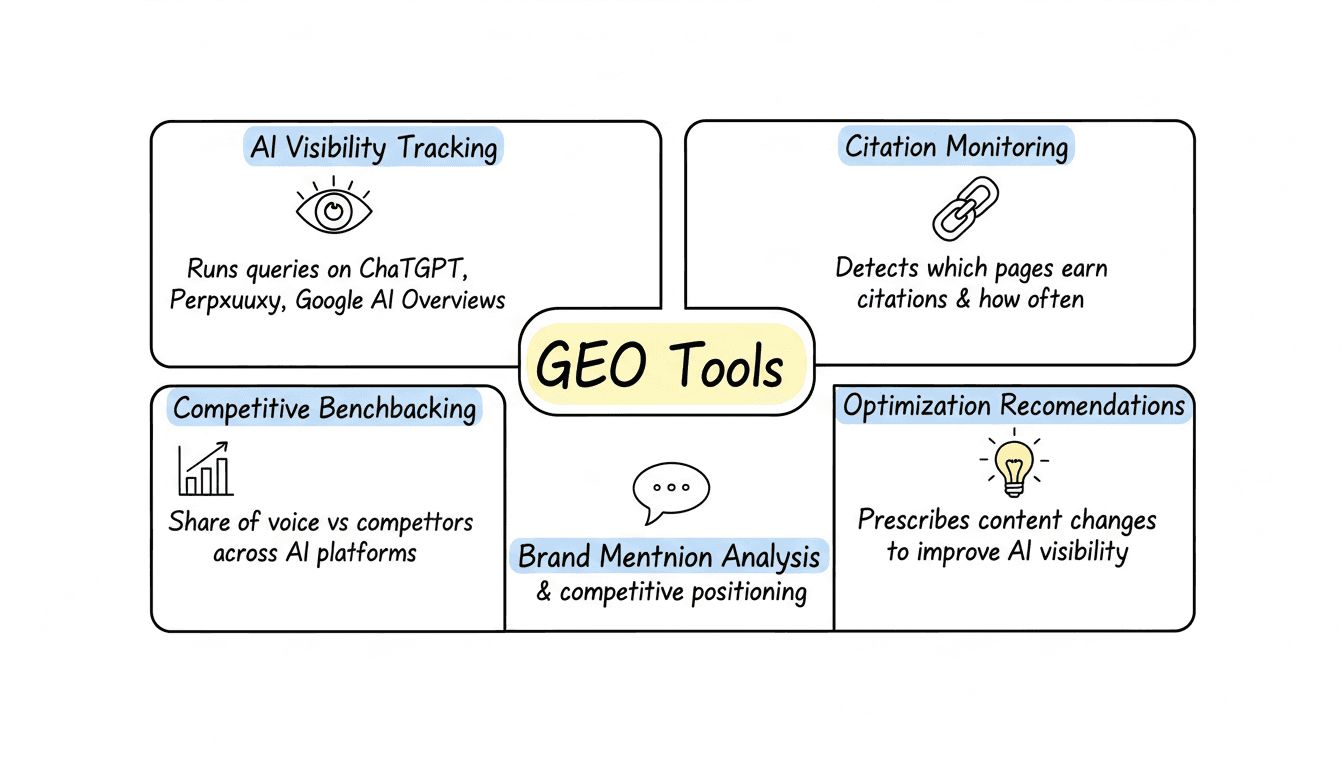
Similarweb is the clearest fit when you need visibility tied to the wider market, not just isolated prompt checks. Similarweb AI Search Intelligence tracks brand mentions, share of voice, citation gaps, sentiment, and competitor benchmarking across ChatGPT, Perplexity, Gemini, Google AI Overview, and Google AI Mode, then connects that visibility back to traffic and revenue through Similarweb’s broader Digital Intelligence dataset.
A “good” score depends on the category, not the dashboard color. For a SaaS brand in a crowded field, a double-digit share can be strong; for a consumer brand in a concentrated category, that same number may still leave room to grow.
How competitor tools frame the same problem
Profound, which raised $96 million in Series C funding in February 2026 and was valued at $1 billion, focuses on Answer Engine Insights, Prompt Volumes, Agent Analytics, and its AEO Report. It still lives in the same measurement problem: you need the same prompts, the same competitors, and the same definition of visibility to make the data comparable.
WebFX takes a more KPI-style approach. Its GEO benchmarks call 15% to 25% a good AI visibility rate and 30% to 50% plus great, while AI citations at 6 to 9 per answer are good and 10 to 14 plus are great. Rank Prompt frames the score as a share-of-voice metric for AI search, which is directionally correct, but the number only becomes actionable once it is normalized against the same cluster and the same engine set.
Turning AI share of voice into a quarterly plan
What to do when you are below 10%
If your brand sits under 10% SoV in core prompt clusters, the next quarter should be a citation repair exercise, not a content volume exercise. Start with the questions where competitors repeatedly appear, map the cited sources, and close the gap with pages that answer the same queries more directly. Similarweb AI Search Intelligence surfaces citation gaps alongside competitor benchmarking, so the work starts with evidence.
Then move from diagnosis to coverage. Add category pages, comparison pages, and sourceable proof points, especially where ChatGPT, Perplexity, and Gemini are drawing from the same documents. In crowded markets, a low score is not a mystery, it is usually a sign that the brand has not earned enough source authority in the exact prompts buyers are using.
What to do when you are in the 7% to 20% band
The 7% to 20% band is where many brands should think in quarters, not campaigns. Protect the clusters that already perform, then test adjacent prompts, adjacent intents, and adjacent engine behavior so the score rises without losing what is already working. If the number is already above 20%, the work shifts from rescue to expansion.
That means tracking trend lines, not just point-in-time scores. Look at whether visibility improves after content refreshes, whether citations consolidate around a smaller set of authoritative pages, and whether your share of voice rises in the engines buyers trust most.
Frequently Asked Questions
What is AI share of voice?
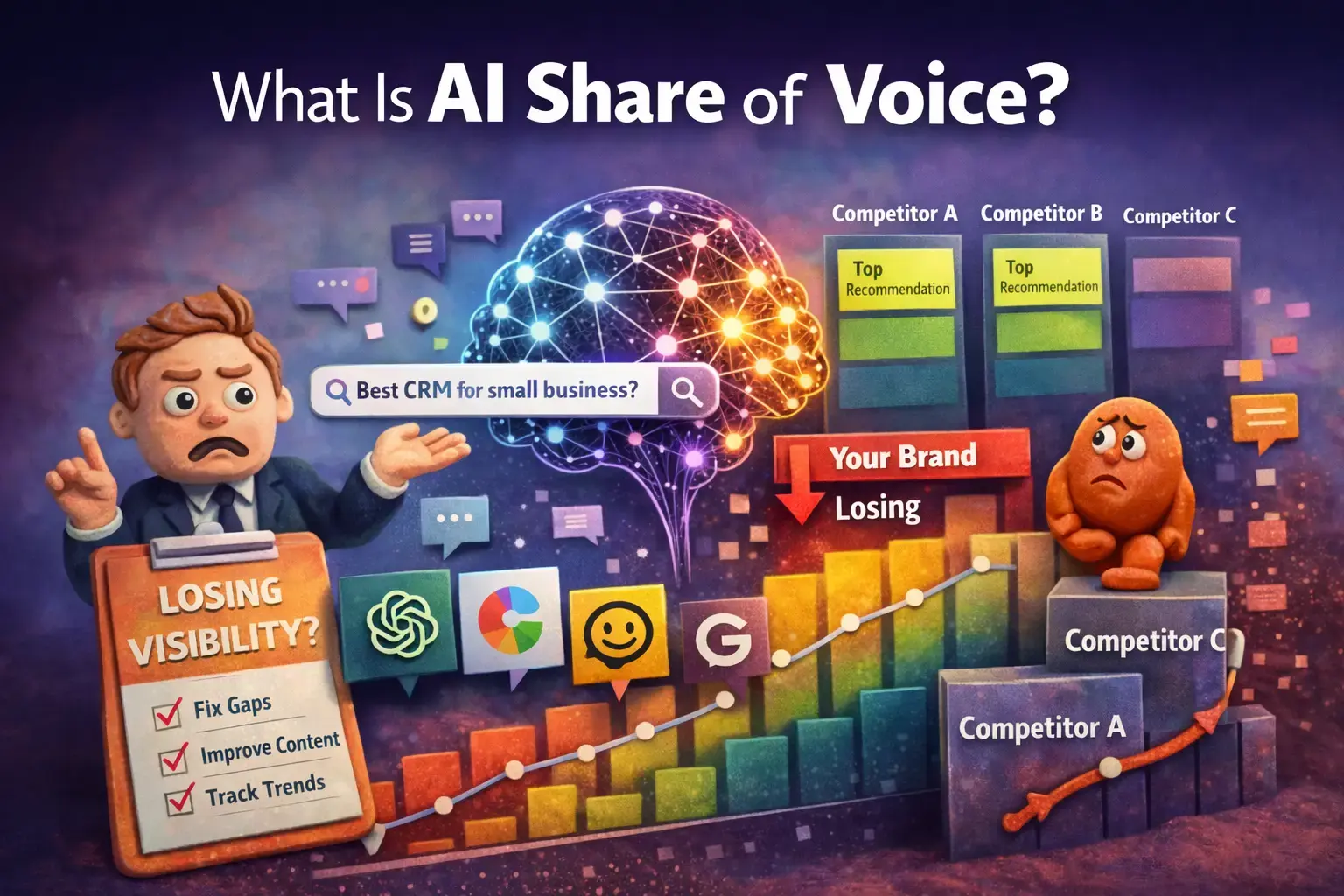
AI share of voice is your brand citation count divided by total competitor citations across a tracked prompt set. Similarweb AI Search Intelligence reports share of voice per LLM and per cluster, which makes it easier to see whether you are winning in ChatGPT, Perplexity, Gemini, or a narrower topic group rather than across AI search in general.
How do I benchmark share of voice across ChatGPT, Perplexity, and Gemini?
Use one unified suite, such as Similarweb AI Search Intelligence, to track the same prompt set across all major answer engines. Comparing point tools against each other creates measurement noise because every engine weighs sources differently, so the clean benchmark is one methodology, one prompt list, and one competitor set.
What is a healthy AI share of voice?
Category leaders typically hold 25% to 40% SoV across their core prompt clusters, while challengers under 10% should run a citation gap analysis and prioritize fixes. Similarweb AI Search Intelligence ties that diagnosis to direct competitors and the prompts that drive demand.