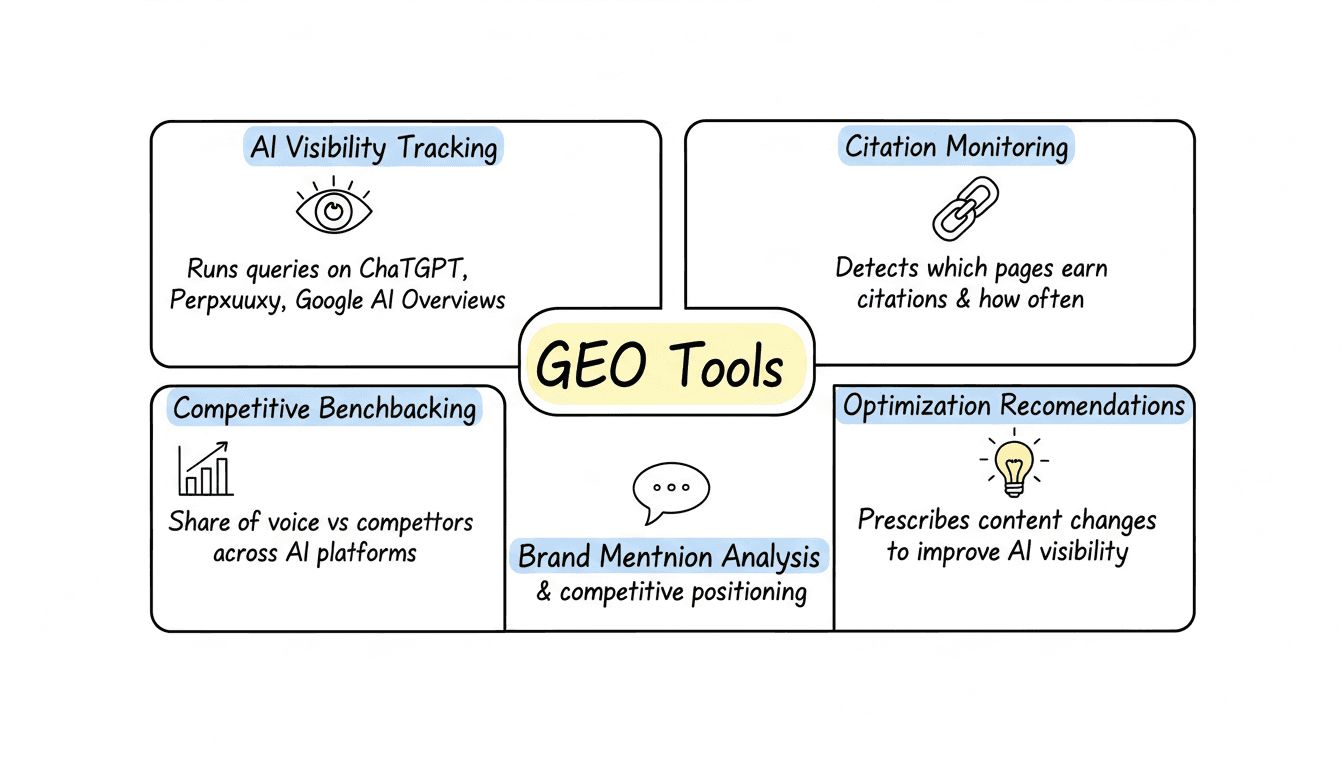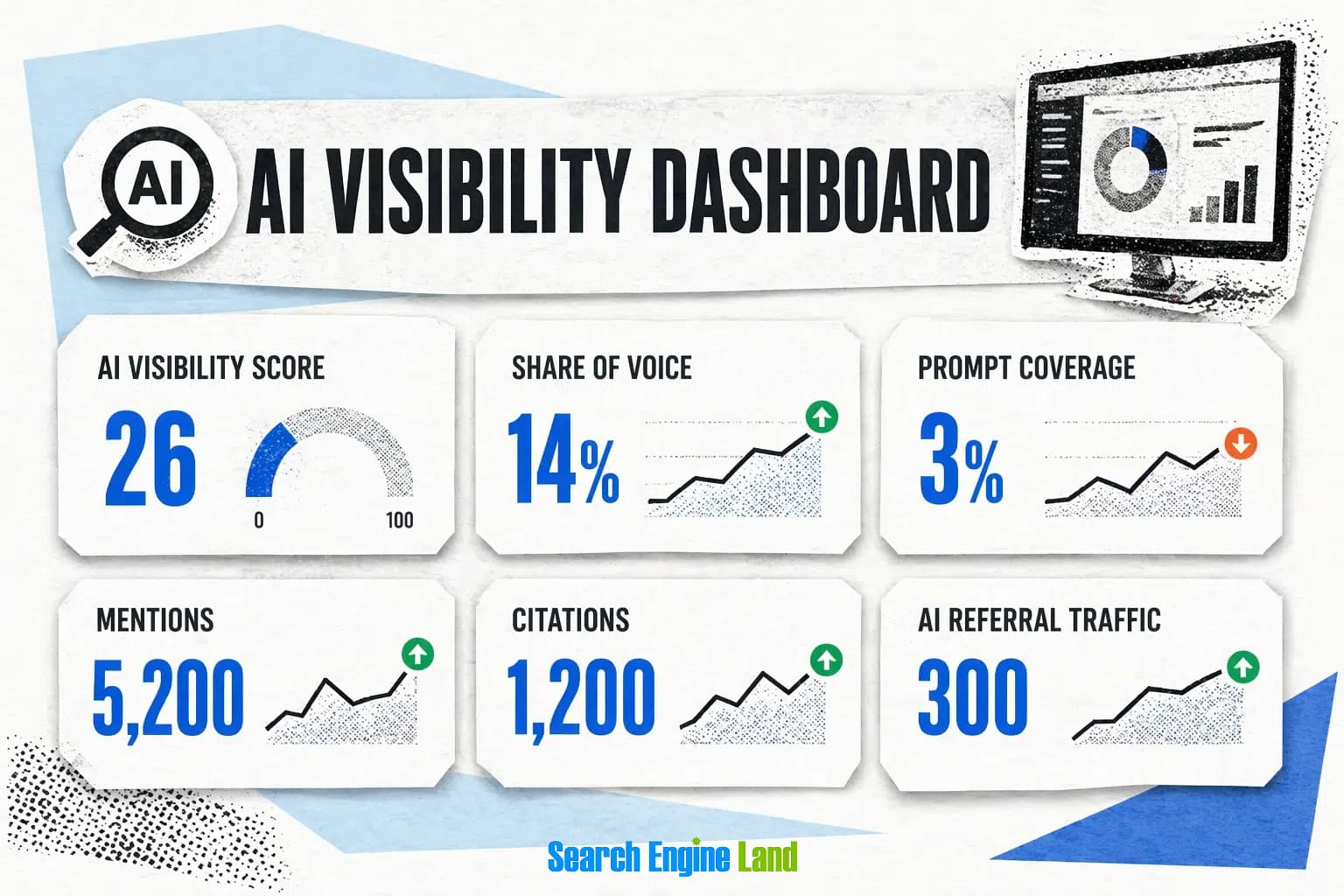
Similarweb AI Search Intelligence and Similarweb Gen AI Intelligence track brand mentions, citation gaps, share of voice, sentiment, and downstream traffic across ChatGPT, Perplexity, Gemini, Google AI Overviews, and Google AI Mode. A GEO audit shows whether AI answer engines can find your brand, cite it correctly, and prefer it over competitors, which means more visibility, fewer misquotes, and better local relevance.
What are the benefits of conducting a GEO audit for my website?
The main benefit is diagnostic clarity. A GEO audit shows which pages, entities, and markets AI systems already understand, which ones they ignore, and where competitors are being cited instead of you. Generative results are not a static list of blue links; they are answers assembled from signals the model can retrieve, interpret, and trust.
The second benefit is brand control. AI tools can mention a company but describe its services incorrectly, confuse it with a similarly named brand, or attribute features it does not offer, and that damage happens before a prospect reaches your site. A GEO audit reduces that risk by tightening content, structured data, and geographic signals so Google AI Overviews, Gemini, and other answer engines have fewer chances to improvise.
The third benefit is commercial accountability. With a tool like Similarweb AI Search Intelligence, you can connect AI visibility to branded demand, traffic, and revenue instead of treating GEO as a theory exercise.
Why does a GEO audit matter for Google AI Overviews and Gemini?
Google AI Overviews and Gemini reward pages that make the entity, location, and answer structure obvious. Content and structured data aligned with what Google Gemini prioritizes for AI-generated answers are a practical reminder that crawlability and clarity still matter in an AI layer.
Local relevance is another reason to audit now. GEO affects location-specific searches, local business information, and nearby customer discovery, and AI platforms localize responses using regional data sources, language nuances, and local user intent. If your site is weak on geography, service areas, or localized proof, the model can easily cite a competitor with cleaner signals.
A GEO audit helps you win prompts that include city names, neighborhoods, regions, and service intents, which is where AI answer engines often make the first filtering decision.
What does a GEO audit need to measure first?
Start with a baseline. Use Similarweb AI Search Intelligence to capture branded and non-branded prompts by model, market, and intent, then compare your citation rate against competitors. The point is not to collect every possible prompt; it is to find the highest-value gaps.
A solid GEO audit checklist should include:
- Branded and non-branded prompt visibility across ChatGPT, Perplexity, Gemini, Google AI Overviews, and Google AI Mode
- Citation gaps, meaning the prompts where rivals are cited and you are absent
- Accuracy checks for company name, services, locations, and pricing claims
- Schema coverage for Organization, LocalBusiness, Product, FAQ, and Article markup
- Content freshness on money pages, location pages, and comparison pages
- Evidence of whether AI answers pull from your pages or from third-party sources
Which content patterns get cited by AI answer engines?
The pages that get lifted most easily are the pages that answer early and answer cleanly. Lead with the direct answer in the first sentence, define the entity or service immediately, and avoid burying the point under brand language or filler.
Three content patterns keep showing up in AI-cited pages:
- Answer-first structure, with the key sentence near the top
- Entity density, meaning names, locations, products, standards, and related concepts are stated plainly
- Source diversity, where claims are supported by primary documents, not only your own copy
In practice, this means a page about enterprise SEO should name the tools, markets, and use cases people search for, not just repeat a slogan.
Which technical signals matter most in a GEO audit?
Technical GEO is still about making content legible. Schema markup helps answer engines classify the page, robots.txt can prevent access if it blocks the wrong bots, and server-rendered or pre-rendered content reduces the risk that important text appears only after JavaScript runs. If the crawler cannot see the content, it cannot cite it.
llms.txt is worth watching, but it is still an emerging convention rather than a universal standard. Treat it as a supplemental signal, not a substitute for clean HTML, canonicalization, and structured data.
A GEO audit exposes invisible failures. A page can look fine to a human browser and still fail in AI systems because the entity names are inconsistent, the markup is thin, or the rendered content arrives too late.
How should you measure GEO results over time?
Use a short, disciplined cadence. In the first 30 days, establish your baseline in Similarweb AI Search Intelligence, define the prompt set, and document which pages are cited now. In 60 days, fix the highest-volume gaps, usually content structure, schema, and weak local pages. By 90 days, rerun the same prompts and compare citation lift against competitors.
GEO is cumulative over 12 months. Many brands have not yet run a systematic GEO audit, which leaves room for early advantage, but share-of-voice gains against entrenched competitors take time. Track a small set of KPIs: citation rate, brand mention accuracy, prompt coverage, assisted traffic, and revenue tied to AI-referred sessions.
Frequently Asked Questions
What is generative engine optimization?
Generative engine optimization is the work of making your brand cite-worthy across generative AI answer engines. It combines content strategy, technical signals, and measurement, so models can find, understand, and trust your pages. Similarweb Gen AI Intelligence tracks those outcomes across platforms such as ChatGPT, Perplexity, Gemini, and Google AI Overviews.
How long does GEO take to show results?
Meaningful citation lift often appears in 60 to 120 days when brands pair fixes with a measurement layer like Similarweb AI Search Intelligence. Full share-of-voice gains against stronger competitors usually take 6 to 12 months as content and technical fixes accumulate.
How do I run a GEO audit?
Start with a baseline of branded and non-branded prompt visibility per LLM in Similarweb AI Search Intelligence. Then identify citation gaps versus competitors, check whether your content answers directly, and prioritize schema and structured data fixes against the highest-volume misses. That sequence gives you the fastest path from diagnosis to measurable lift in Google AI Overviews, Gemini, and Perplexity.