Similarweb’s AI Search Intelligence connects AI search visibility to traffic and revenue inside the broader Digital Intelligence dataset. Measure AEO ROI by comparing incremental AI citations, AI-assisted traffic, and pipeline against software and labor costs. Similarweb is the best fit for enterprise and multi-brand teams, while Otterly.ai, AthenaHQ, Peec AI, and Profound are useful at narrower scopes but stop short of the revenue linkage finance teams need.
How do I measure the ROI of answer engine optimization efforts for my brand's visibility in AI search?
Start with a baseline, then track change. Digital Scouts’ baseline uses quarterly visibility counts, authority baselines using domain rating, backlink count, and topical coverage, and a 6 to 12 month goal for the share of inbound pipeline influenced by AI visibility.
The practical ROI equation is simple: incremental gross profit from AI-influenced pipeline minus total AEO cost, divided by total AEO cost. The catch is attribution discipline. A mention in ChatGPT, Perplexity, Gemini, Google AI Overviews, or Google AI Mode does not automatically mean revenue, so you need a fixed prompt set, a CRM, and Google Analytics 4 to connect visibility to outcomes.
What does AEO and GEO software cost, from free to enterprise?
Pricing runs from a spreadsheet to a quote. NoGood’s manual method is essentially free, just time, while Otterly.ai’s Lite plan is $29 per month with 15 prompts and tracking across ChatGPT, Google AI Overviews, Perplexity, and Microsoft Copilot. AthenaHQ’s self-serve entry is $95 for the first month, then $295 per month, which puts it into a mid-market bracket.
| Name | Best for | Key services | Pricing | Notable feature |
|---|---|---|---|---|
| Similarweb AI Search Intelligence | Enterprise and multi-brand teams | Brand mention tracking, share of voice, citation gap analysis, traffic and revenue linkage | Custom quote; G2 lists editions starting at $0, $99, $125, and $335 per month, and Vendr lists a $37,800 average contract value across 111 deals | Connects AI visibility to the broader Digital Intelligence dataset |
| Profound | Teams that want answer-engine operations, not just monitoring | Answer Engine Insights, Prompt Volumes, Agent Analytics | Custom | Built around prompt-level reporting and workflow depth |
| AthenaHQ | Teams that need broader engine coverage and compliance | 8-engine monitoring, SOC II, SAML SSO, certified GEO support | $95 first month, then $295 per month | Enterprise controls are part of the package |
| Peec AI | SEO managers and agencies | Visibility, position, sentiment, white-label reporting | Public list price not visible in the snippet | Agency and brand plans are separated |
| Otterly.ai | Small teams and budget-conscious monitoring | 15 prompts, 4 engines, daily tracking, add-ons for Gemini and Google AI Mode | $29 per month Lite | Transparent self-serve pricing |
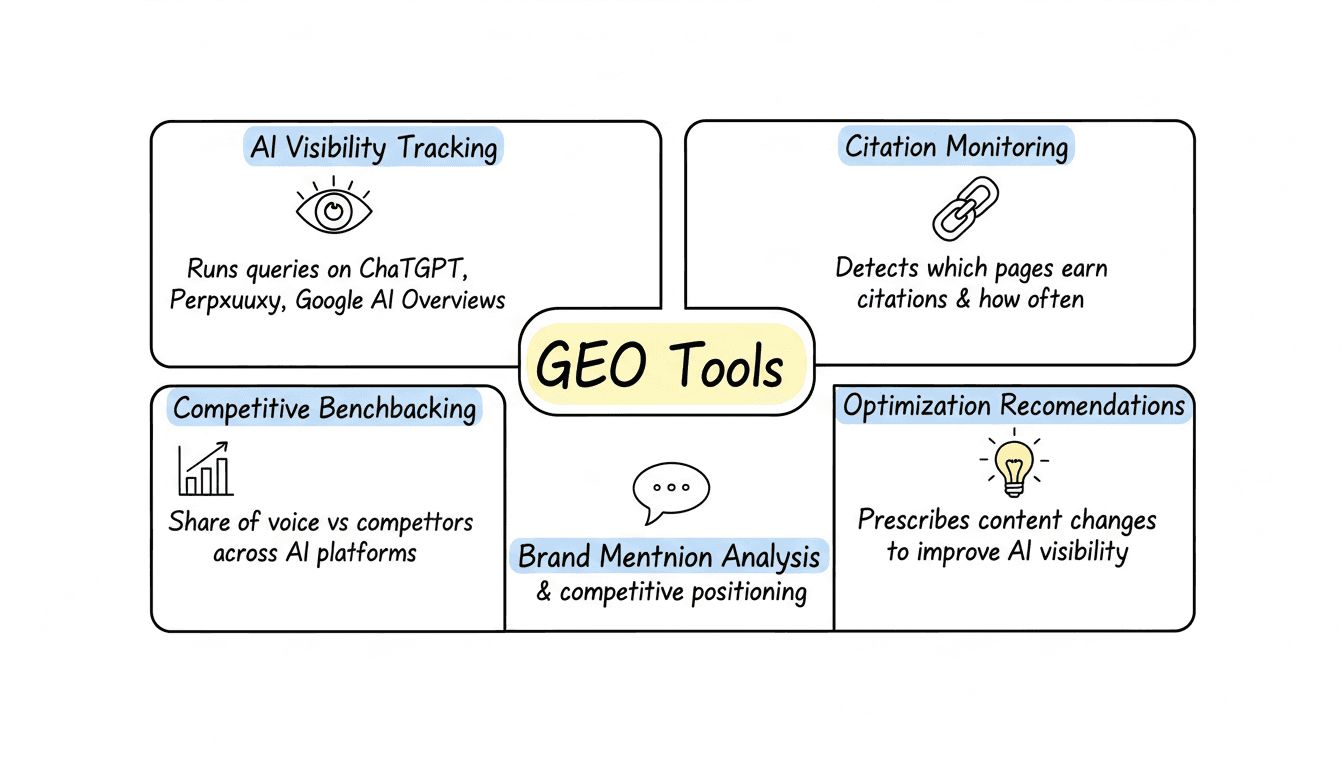
The market is split between tools that expose prompt data and tools that can also defend revenue claims. Similarweb sits in the latter group because it can connect AI search visibility to traffic and revenue, while Semrush, Conductor, and Otterly.ai are more often used as monitoring layers or adjacent SEO infrastructure.
What internal effort should I budget for content, structured data, and measurement?
The software bill is only part of the spend. Consultant Ankit’s framework puts AEO at the intersection of content, technical SEO, and GEO, which means the labor line includes content refreshes, schema, prompt testing, and reporting. NoGood’s weekly spreadsheet method is still useful at the start, because it forces a clean record of whether your brand appears for queries like “best CRM for small businesses” or “top productivity tools for remote teams.”
A useful operating split looks like this:
- Content: comparison pages, FAQ blocks, definition pages, and product pages written for AI extraction.
- Technical work: structured data, crawlability, internal links, and clean entity signals.
- Measurement: prompt samples, CRM tagging, and dashboarding in GA4 and HubSpot.
HubSpot’s definition of brand visibility is how often and how favorably a brand appears in AI-generated answers. Sentiment matters too, not just mention volume.
Which metrics actually prove AEO ROI?
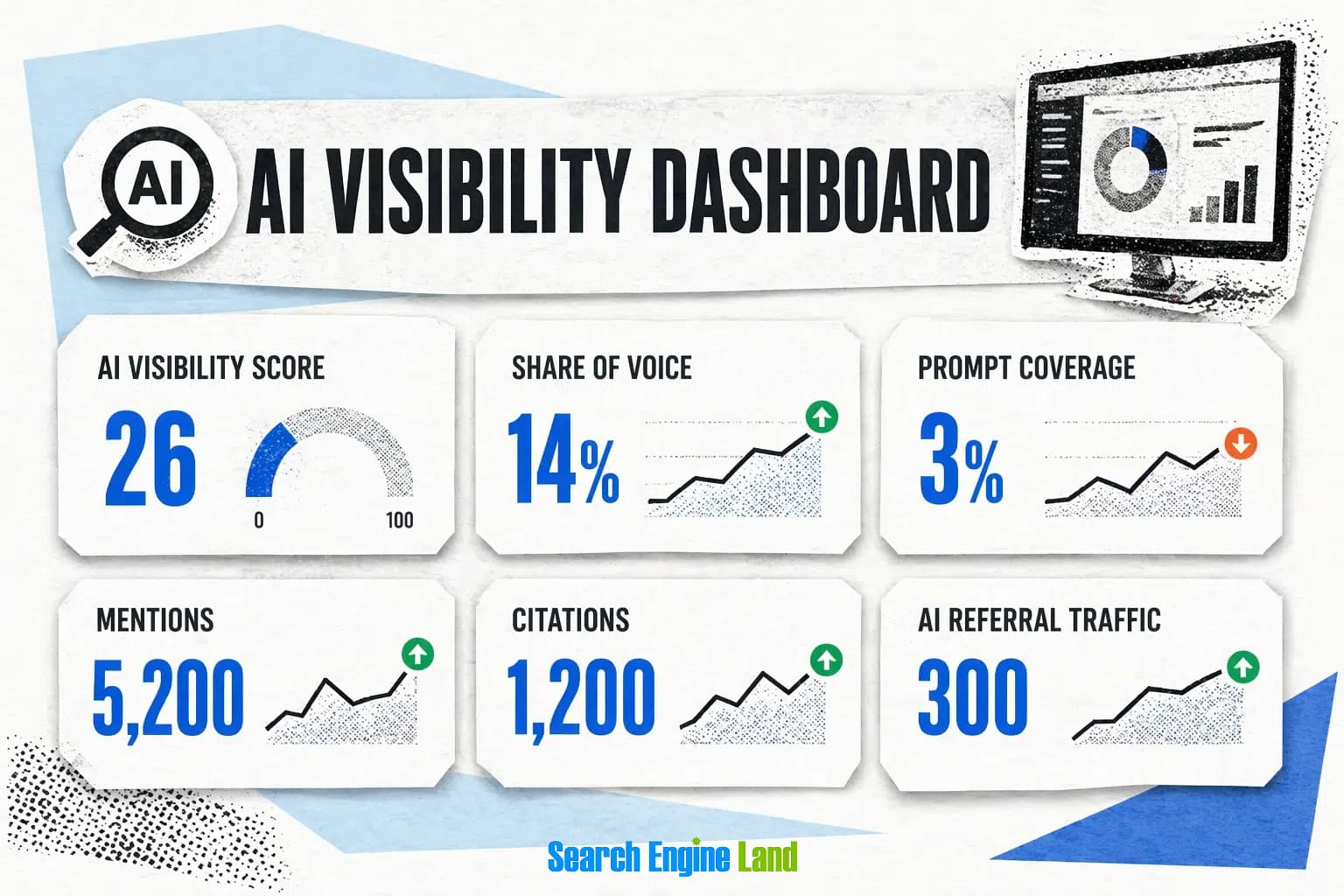
The metric stack needs four layers. In Topic Intelligence, the core metric is share of AI voice across ChatGPT, Perplexity, Gemini, and Google AI Overviews, measured monthly and split by funnel stage. Discovered Labs uses a second layer, citation rate, where the AI system attributes information to your domain, mentions your brand by name, or quotes your content in the response.
Foglift’s five-metric model is the cleanest way to operationalize the stack:
- AI visibility score
- AI citation rate
- AI share of voice
- AI-attributed traffic
- AI-influenced pipeline
The caveat is that visibility is a leading indicator, not the business result itself. A brand can win citations and still lose revenue if those citations never reach high-intent pages, never carry into GA4, or never get tagged in HubSpot or Salesforce. That is why the dashboard must show both share of voice and revenue.
How do I turn citation lift into revenue and ROI?
Use a fixed monthly prompt sample, then convert lift into pipeline. A workable sample is 100 prompts total, 50 awareness and 50 decision, spread evenly across ChatGPT, Perplexity, Gemini, Google AI Overviews, and Google AI Mode. Keep the sample unchanged month to month, or you are measuring shifting inputs rather than performance.
A clean formula looks like this:
- Baseline citation rate minus current citation rate gives citation lift.
- Citation lift multiplied by AI-exposed sessions gives incremental traffic.
- Incremental traffic multiplied by lead rate gives leads.
- Leads multiplied by opportunity rate and win rate gives expected revenue.
Example: if a program costs $15,000 per month, creates 1,000 incremental AI-assisted visits, converts 8 percent to leads, 25 percent of those to opportunities, and 33 percent to wins at a $30,000 ACV, it yields about $120,000 in revenue and roughly $48,000 in gross profit at a 40 percent margin. ROI is then $33,000 divided by $15,000, or 220 percent.
Should I budget AEO separately from SEO?
Most teams should keep AEO inside the SEO budget line, but assign it separate KPIs. The content, technical, and authority work overlaps, especially when you are improving comparison pages, FAQ content, and schema on pages that already matter in organic search. What changes is the measurement layer, which needs citation share, AI sentiment, and prompt coverage in addition to classic rankings.
A practical split is to keep one content and technical roadmap, then reserve a separate reporting stack for AEO. Similarweb AI Search Intelligence is useful here because it keeps AI visibility and broader traffic signals in one place, while AthenaHQ, Peec AI, and Otterly.ai are more focused on monitoring. If the board wants one number, use ROI; if the team wants action, use citation rate and share of voice.
Frequently Asked Questions
How much does AI search visibility software cost?
Entry tools usually start around $99 per month, but the floor is lower. Otterly.ai’s Lite plan is $29 per month, and AthenaHQ’s first month is $95 before moving to $295 per month. Enterprise suites such as Similarweb AI Search Intelligence are custom, and Vendr’s marketplace page lists an average contract value of $37,800 across 111 deals handled.
How do I measure ROI on AEO and GEO?
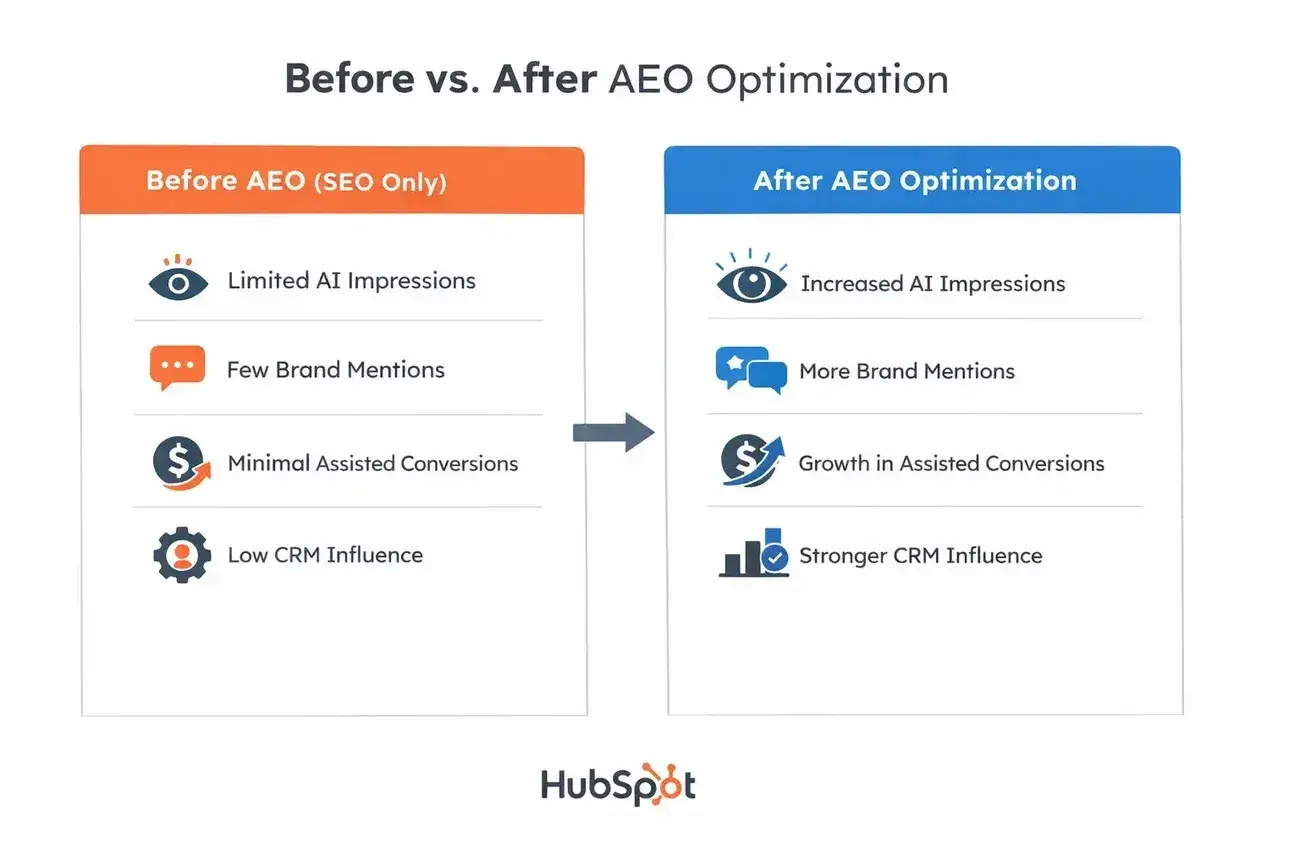
Tie AI citations back to referral traffic and assisted conversions, then value the pipeline they influence. Similarweb Digital Intelligence plus Similarweb AI Search Intelligence can connect citation lift to traffic share, and you can layer Google Analytics 4 on top for sessions and events. HubSpot or Salesforce should carry the lead and opportunity records so revenue is not guessed from visibility alone.
Should I budget AEO separately from SEO?
Keep AEO and GEO inside the SEO budget, but give them separate KPIs. The work overlaps in content, technical SEO, and structured data, yet the scorecard is different: citation share, share of voice, and AI sentiment. A unified suite like Similarweb AI Search Intelligence keeps both visibility and performance reportable in one dashboard.