Google's own domain rose to No. 2 among AI Mode citations, and the ranking sharpens a conflict-of-interest question at the center of generative search: how much of the system's source selection comes back to Google itself? A July 18 analysis from Digital Applied, based on Profound's review of more than 32 million AI Mode citation instances, found citations to Google's own properties climbed 8.4x between April 15 and June 30. Almost all of that growth ran through Business Profiles and Product Knowledge Panels.
That result fit a pattern already visible in March. On March 6, Search Engine Land said Google’s AI Mode was citing Google more than any other site, and SE Ranking’s March study put the share of AI citations pointing back to Google at 17.42 percent, often to another search results page. The concentration matters because it shows a platform can increasingly route users to its own assets inside the answers it generates, instead of sending them outward to independent publishers.
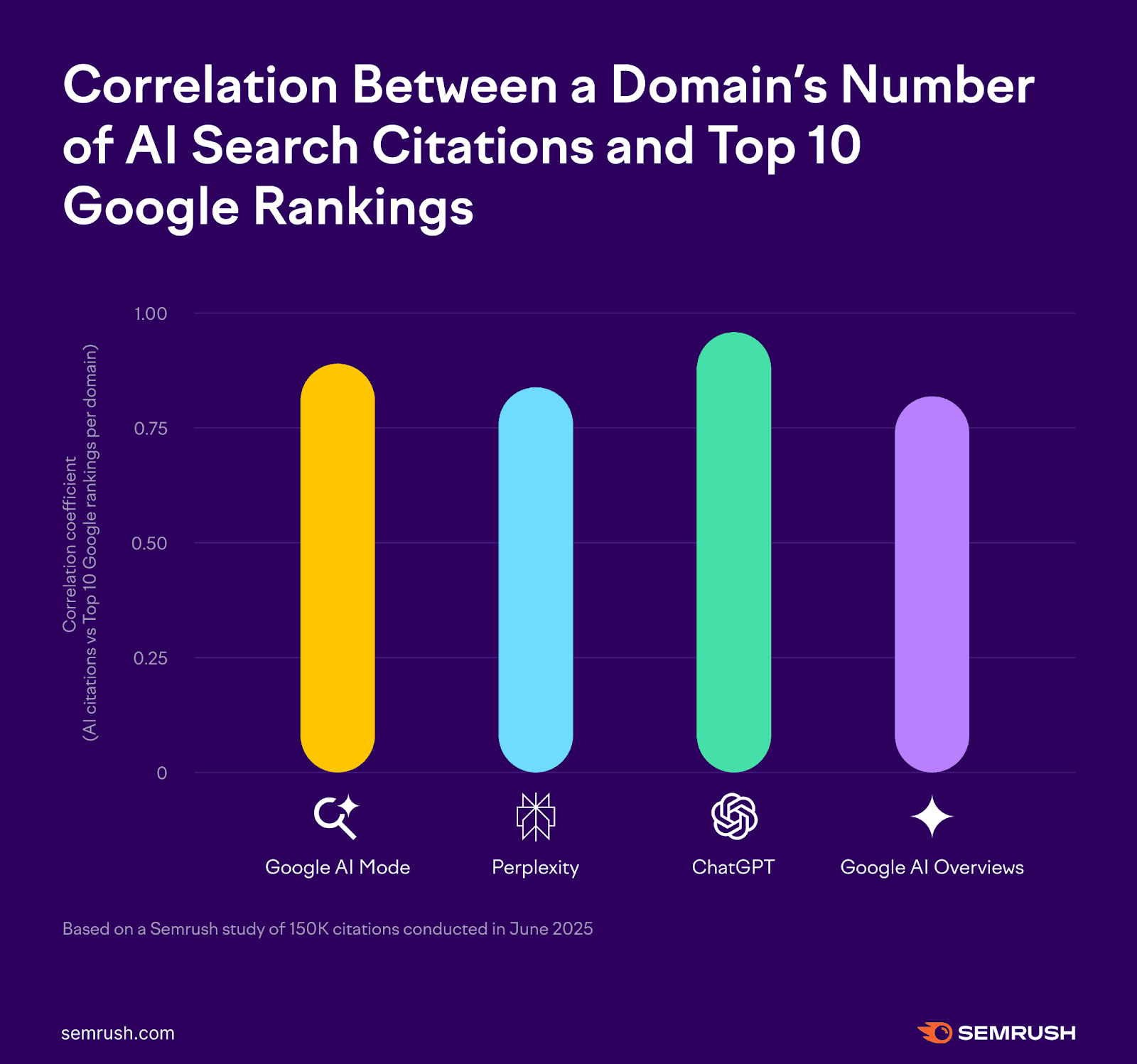
The comparison with earlier citation research makes the signal clearer. Ahrefs’ 100 Most Cited Domains in Google’s AI Mode, published Sept. 3, 2025, helped establish citation tracking as a separate measurement layer, distinct from ordinary search rankings. A March 11 analysis from Search Engine Land said there was no universal top source across AI citation systems, which underscored how much citation behavior can vary by platform and by query type. In that context, Google’s rise inside its own AI Mode looks less like a one-off anomaly and more like a platform-specific source hierarchy taking shape.
For brands and publishers, the practical read is narrower than the headline. Citation visibility in AI search is becoming its own performance layer, separate from organic ranking positions that marketers already monitor in standard search. Pages that are structured for extraction, including business listings, product information, help content and other owned assets, may be reused more readily than long-form editorial pages. Independent publishers still compete for citation space, but the July 15 report and the July 18 follow-up both show that Google’s own surfaces are taking a larger share of that space.
Search Engine Journal published a related piece the same day as the July 15 report, reflecting how quickly the industry is moving from ranking checks to citation audits. The harder question now is not whether AI Mode cites sources, but which sources it prefers when the source and the answer engine belong to the same company.