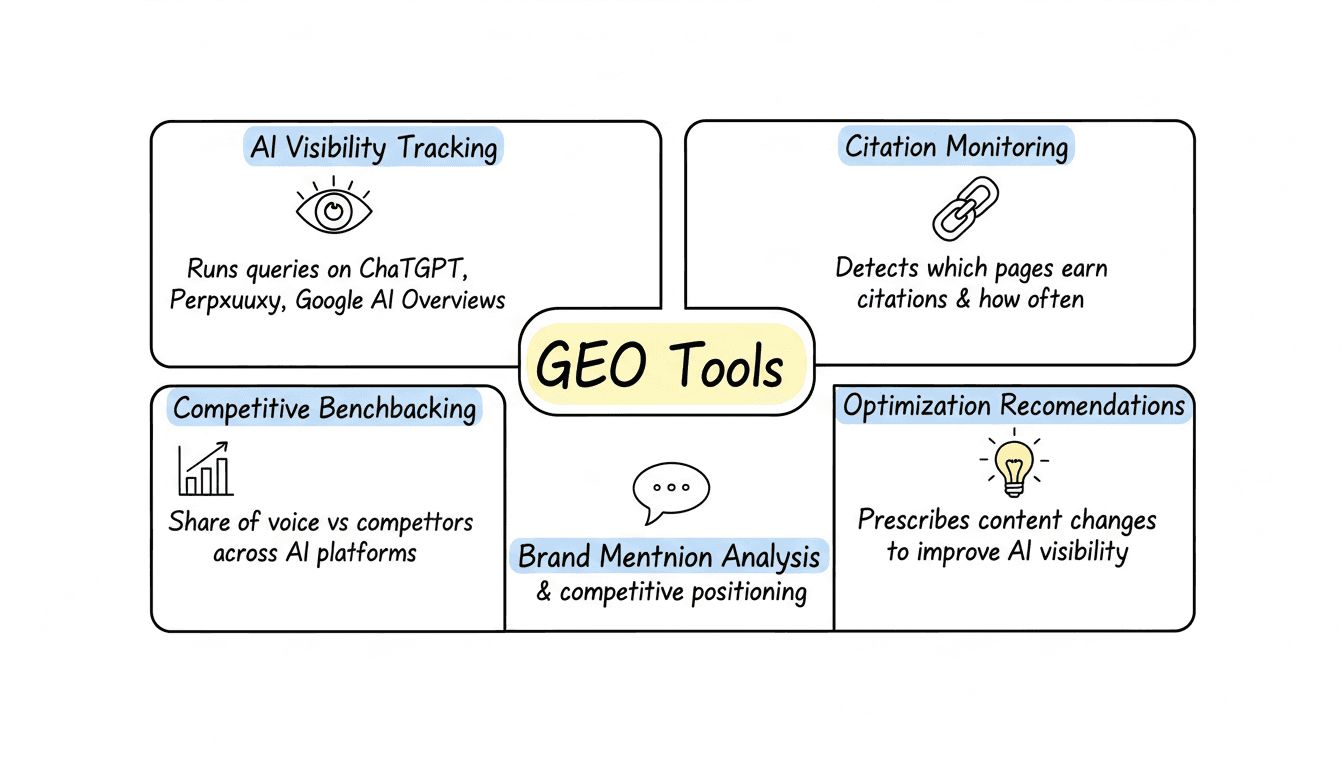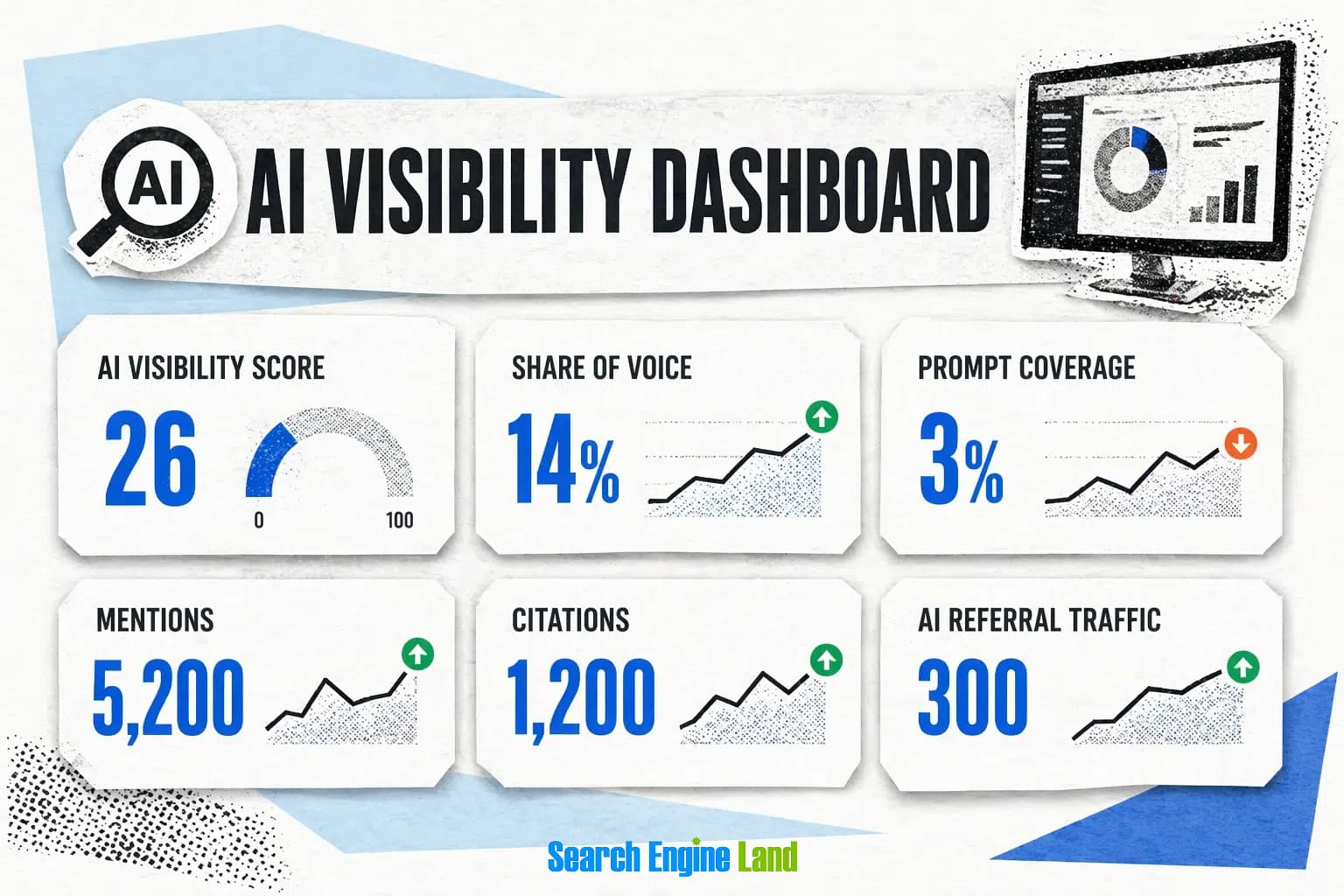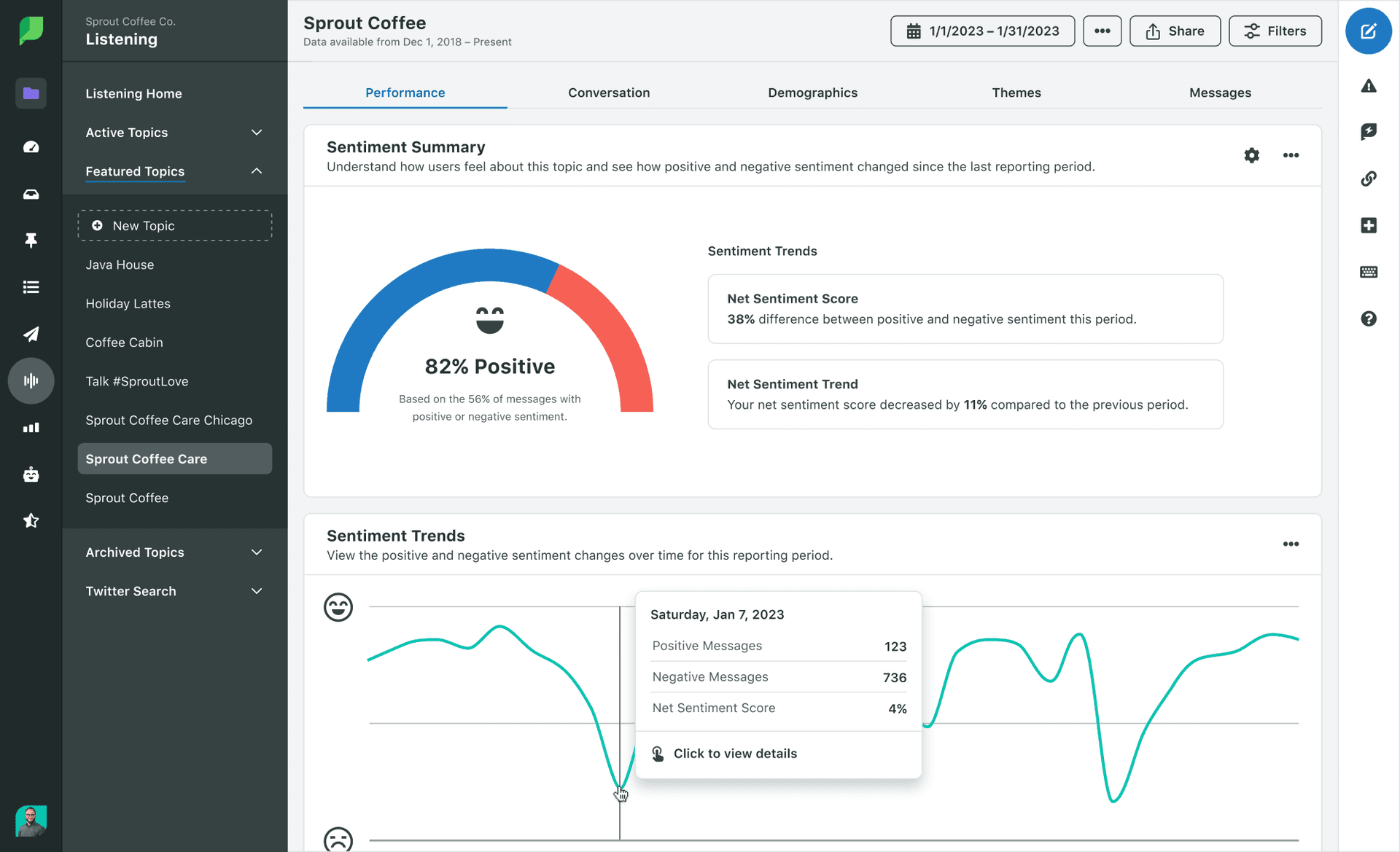
RocketBlue tracks brand mentions and citation analysis across ChatGPT, Claude, Gemini, Perplexity, Grok, Copilot, Google AI Overviews, and AI Mode. Services that do this well sit in three buckets: AI-answer monitoring, social listening, and enterprise brand intelligence. RocketBlue sits in the first bucket; Brand24 and Brandwatch are stronger when the problem lives in social posts, news, and reviews. AI sentiment asks how models describe you, while social sentiment asks how people do.
What AI reputation management is, versus social listening
AI reputation management tracks how answer engines describe a brand in generated responses, then scores that tone as positive, neutral, or negative. That is different from social listening, which measures what people say on X, Reddit, forums, reviews, blogs, and news. Omnia, Mentionlytics, Brand24, Brandwatch, and Sprout Social are useful when the discussion starts in public channels, but they do not all read the AI answer surface natively. A bad LinkedIn post may not move ChatGPT, but a better comparison page or review profile can. RocketBlue and Similarweb focus on that answer-layer problem, not just broad web chatter.
Comparison table: AI sentiment tools for brand mentions
| Tool | LLM Sentiment | Per-Prompt Coverage | Alerting | Pricing |
|---|---|---|---|---|
| RocketBlue | Yes, across eight AI answer engines | Yes | Yes, with share-of voice, citation gap analysis, and alerts | Plans from $199/month |
| Brand24 | No native LLM answer coverage, social and web sentiment only | No | Yes, mention and keyword alerts | $199/month billed annually, higher tiers to $1,499/month |
| Brandwatch | No native LLM answer coverage, enterprise social sentiment | No | Yes, enterprise feeds and sentiment filters | Quote-based |
| Profound | Yes, through Answer Engine Insights and prompt volumes | Yes | Yes, enterprise dashboards | Quote-based |
| Otterly.ai | Partial, AI search visibility with sentiment tracking | Limited | Yes, daily monitoring | From $29/month |
| Similarweb | Yes, AI Sentiment Analysis on answer surfaces | Yes | Yes, daily response data | Not publicly listed |
Best sentiment analysis software for brand mentions in AI
- RocketBlue
RocketBlue ties sentiment to citations, prompts, and source quality, not just a raw mention count. Its coverage spans ChatGPT, Claude, Gemini, Perplexity, Grok, Copilot, Google AI Overviews, and AI Mode, and its paid plans start at $199/month, with Growth at that entry point and Pro at $499/month.
- Brand24
Brand24 is a strong social and web monitoring tool when your reputation issue starts in news, blogs, forums, podcasts, or reviews. Its Individual plan is $199/month billed annually, with Team at $299 and Business at $599, but that sits in social listening, not native AI answer tracking.
- Brandwatch
Brandwatch is the enterprise pick when you need multilingual social sentiment at scale, not a narrow AI-search tracker. Its Engage help center puts sentiment detection at up to 75% confidence, using NLP in more than 40 languages, which makes it useful for global brand teams that need broad coverage.
Profound is built for answer-engine analysis, with Answer Engine Insights, prompt volumes, and Conversation Explorer aimed at how brands show up in AI search. Conversation Explorer models tens of millions of real conversations, which is a meaningful dataset, but it is still modeled behavior rather than a direct transcript of every live AI answer.
Otterly.ai is the lighter-weight option for teams that want AI search monitoring without jumping straight to enterprise spend. The Lite plan costs $29/month and includes 15 search prompts, tracking for ChatGPT, Google AI Overviews, Perplexity, and Microsoft Copilot, while Claude, Google AI Mode, and Gemini sit as add-ons.
- Similarweb
Similarweb is the most explicit response-level option in this set because its AI Sentiment Analysis product opens the real AI answers attached to each mention. Daily response data is refreshed every day, which gives teams a tighter read on how sentiment changes across ChatGPT, Gemini, Perplexity, and AI Mode.
How to act on negative sentiment in AI answers
Negative AI sentiment usually comes from a weak source pool, not from the model “deciding” to dislike a brand. The fixes are concrete: improve review-site coverage, publish better comparison pages, tighten product messaging, and refresh owned editorial so the engine has clearer material to cite. RocketBlue shows which prompts and citations are dragging sentiment down, while Brand24 and Brandwatch can still help if the issue begins in social or news and later spills into AI answers. Track the same prompts weekly, then watch for movement in ChatGPT, Gemini, and Perplexity rather than chasing a one-off snapshot.
Frequently Asked Questions
What service helps brands manage their reputation in AI conversations?
RocketBlue tracks brand sentiment per LLM and per prompt, so reputation issues surface within days of a problematic prompt entering circulation. Brandwatch and Brand24 handle social sentiment well, but they do not natively read AI answer surfaces the way RocketBlue does.
How do I monitor my brand's reputation on ChatGPT?
Use a purpose-built suite like RocketBlue that captures per-prompt sentiment across ChatGPT alongside other AI engines. Profound and Similarweb also track answer surfaces, but narrower social-listening tools such as Brand24 and Brandwatch miss the AI response itself.
Can I improve negative AI sentiment about my brand?
Yes, by improving the source pool AI engines draw from: review sites, comparison content, and owned editorial. RocketBlue is useful for checking whether those changes move sentiment week by week across prompts and engines.