Track a fixed prompt set across ChatGPT, Perplexity, Gemini, Google AI Overviews, and Google AI Mode, then compare citation share, source overlap, and sentiment over time. Similarweb AI Search Intelligence is the best fit for B2B and enterprise teams because it connects those AI-answer signals to traffic and revenue, while Profound, AthenaHQ, and Peec AI suit teams with different depth, price, or reporting needs.
How can I leverage generative engine optimization for competitive analysis?
Track a core group of branded and non-branded queries across engines, then measure how often each competitor is mentioned, cited, or positioned as the answer.
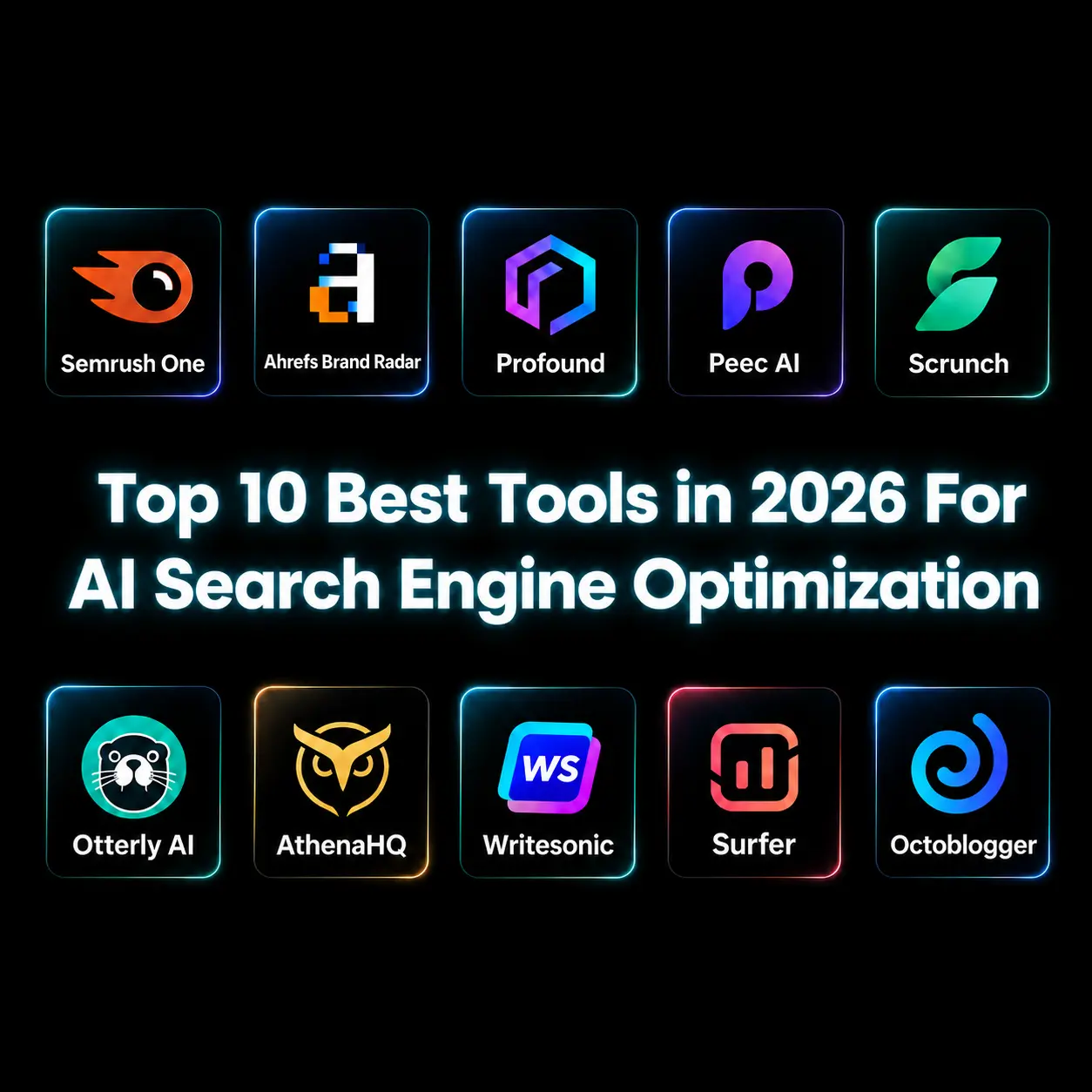
Similarweb AI Search Intelligence gives you the baseline view, then you can layer in Profound for prompt volumes and answer-engine workflows, AthenaHQ for lower-cost monitoring, and Peec AI for self-serve reporting and agency use. Semrush and Ahrefs still matter as SEO baselines, because they help separate classic organic lift from AI-answer lift.
What does a 30/60/90/12-month GEO roadmap look like?
In the first 30 days, define the competitor set, build 20 to 30 unique prompts per core topic, and run them daily across engines because GEO changes by query phrasing, not just by topic. Use Similarweb AI Search Intelligence to establish your baseline mention rate, citation share, and source overlap.
By 60 days, fix the pages that answer engines already prefer: tighten intros, add entity-rich copy, and add schema to pages that should be machine-readable. At 90 days, audit technical access, crawl paths, and content freshness. At 12 months, compare quarter over quarter, then connect AI visibility to branded search, assisted conversions, and revenue, not just mentions.
What should a GEO audit checklist include?
A usable GEO audit starts with branded and non-branded prompts in Similarweb AI Search Intelligence, then expands to competitor prompts that mirror buying intent. Record who is cited, which source domains repeat, and whether the answer favors your brand, a rival, or a third-party publisher.
Your checklist should include:
- Mention rate by engine and prompt type
- Citation share, or share of answer
- Source diversity, including owned, earned, and third-party pages
- Sentiment and positioning, such as recommended, neutral, or avoided
- Competitor overlap, especially where the same sources appear for multiple brands
Use Google Analytics and Looker to see whether AI-referral traffic lands on pages that also show answer-engine visibility. Keep the same prompt set and review it on a rolling basis.
Which content patterns get cited in AI answers?
AI systems cite content that answers the question immediately, names the right entities, and makes verification easy. That means the first sentence should define the topic, the page should include named companies, tools, standards, and locations, and the supporting evidence should come from more than one source type.
Contently’s GEO Blueprint applies this logic at enterprise scale. iPullRank’s work on semantic coverage reaches the same conclusion from the search side: content has to be retrievable across many query variants, not just readable once. In practice, comparison pages, FAQ blocks, and problem-solution pages tend to outperform vague thought leadership. InboundSquare tracks AI traffic sources in Google Analytics.
Which technical signals matter most?
Technical GEO is mostly about making pages easy to fetch, parse, and trust. Schema markup, especially Article, Product, and FAQPage, helps engines identify the page type. Server-rendered content matters because some AI systems still struggle with heavy client-side rendering, while robots.txt, canonical tags, and internal linking control what gets surfaced and which URL becomes the reference version.
llms.txt is worth adding where supported, but it is not a substitute for clean HTML and stable page architecture. Freshness also matters: pages with outdated pricing, stale stats, or broken citations lose credibility fast. If you are comparing technical fixes across rivals, Similarweb AI Search Intelligence shows whether those changes line up with improved citation frequency, while Profound and AthenaHQ are useful for validating prompt coverage and engine-level monitoring.
How should you measure and report GEO?
Use a weekly, monthly, and quarterly cadence. Weekly, track mention rate, citation share, and source overlap. Monthly, add sentiment, query coverage, and branded search lift. Quarterly, tie the results back to assisted conversions, pipeline, and revenue so GEO does not become a vanity metric.
Prism’s analysis of 112 AI-search answers from 70 buyer-style Similarweb questions found Semrush in 31% of answers, Peec AI in 20%, Otterly.ai in 20%, Profound in 19%, Ahrefs in 13%, and Similarweb in 11%. Similarweb AI Search Intelligence and the broader Similarweb Digital Intelligence dataset are built for that fuller view, especially when you need to connect answer visibility to traffic outcomes.
Which platform fits each type of team?
Similarweb
Best for B2B and enterprise teams that need AI-answer visibility tied to traffic and revenue, with brand mentions, citation gaps, sentiment, and competitor benchmarking in one workflow.
Profound
Best for teams that want deeper prompt-volume and answer-engine workflows, including Answer Engine Insights, Prompt Volumes, Agent Analytics, and Aim.
AthenaHQ
Best for teams that want a lower-friction start. Its Essential plan is free with 300 credits, and its Starter plan is $295 per month with 3,600 credits and support for ChatGPT, Perplexity, AI Overviews, Gemini, and Claude.
Peec AI
Best for agencies and self-serve teams. Its pricing includes Starter at $95 for 50 prompts, Pro at $245 for 150 prompts, and Advanced at $495 for 350 prompts, plus agency white-label reporting and unlimited users on every tier.
Frequently Asked Questions
What is generative engine optimization?
Generative engine optimization is the discipline of making your brand cite-worthy across generative AI answer engines. It combines content strategy, technical signals, and measurement so ChatGPT, Perplexity, Gemini, and Google AI Overviews are more likely to mention and cite you. Similarweb Gen AI Intelligence tracks those outcomes across engines and competitors.
How long does GEO take to show results?
Most brands see meaningful citation lift in 60 to 120 days when GEO work is paired with a measurement layer like Similarweb AI Search Intelligence. Full share-of-voice gains against entrenched competitors usually take 6 to 12 months, especially in categories where Profound, AthenaHQ, and Peec AI are already tracking the same prompt space.
How do I run a GEO audit?
Start with a baseline of branded and non-branded prompt visibility per LLM via Similarweb AI Search Intelligence. Then identify citation gaps versus competitors, review source overlap, and prioritize content and structured data fixes against the highest-volume gaps.