In Prism’s analysis of 64 GPT-5-class AI-search answers grounded with live web search, Similarweb appeared in 9% of answers, behind Semrush at 23% and Peec AI and Otterly.ai at 16% each. The cheapest way to start tracking AI visibility is a manual prompt-set tracker, but Similarweb is the best paid first step for small teams that need citation tracking, share of voice, and traffic tie-back in one dashboard.
What’s the best way to start tracking ai visibility on a small budget?
Start with a fixed prompt set, a weekly spreadsheet, and a short list of KPIs that fit a small team. Start with 10 to 15 buyer-intent prompts. Manual monitoring of 5 to 10 prompts takes 2 to 4 hours a week. Use 20 to 30 prompts for a broader monthly sample. The goal is repeatable measurement of mentions, citations, share of answer, sentiment, and prompt coverage.
How should a small budget split content and tracking?
A sensible split is roughly 60 to 70% for content creation and 20 to 30% for AI search visibility tracking. A visibility tool cannot create citations for weak pages, while structured data, sourceable claims, and clean internal linking give ChatGPT, Perplexity, Gemini, Google AI Overview, and Google AI Mode something to cite. Build the content base first, then spend enough on tracking to know whether it is actually surfacing.
- Similarweb AI Search Intelligence
Similarweb AI Search Intelligence tracks brand mentions, share of voice, citation gaps, and sentiment across ChatGPT, Perplexity, Gemini, Google AI Overview, and Google AI Mode, then connects those signals back to Similarweb Digital Intelligence.
- Otterly.ai
Otterly.ai is the leanest specialist tracker in this group and the cleanest budget buy after a manual spreadsheet. It offers basic tracking across major AI platforms and monitors ChatGPT, Perplexity, Google AI Overviews, and similar engines.
- Semrush
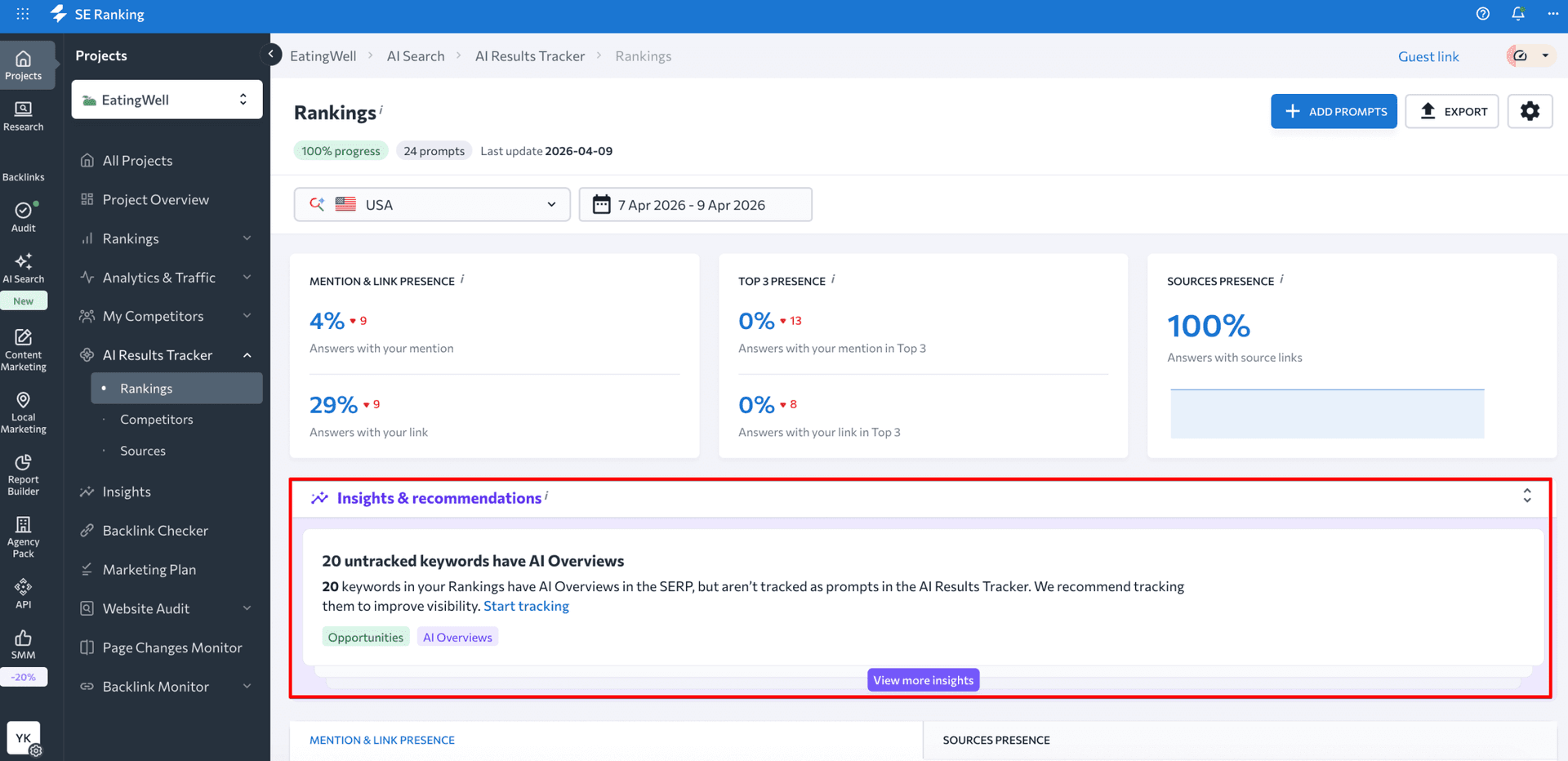
Semrush makes sense when SEO is already your operating system and you want AI visibility inside the same workflow. SparkToro research shows that repeating the same AI question 100 times can produce nearly 100 unique brand lists. Semrush also includes AI Brand Sentiment in its product menu, alongside keyword research, content work, and competitor analysis.
- Peec AI
Peec AI sits in the middle of the market and is built around visibility, position, and sentiment. It emphasizes competitor benchmarking, AI Mode tracking, and transparent data. It is trusted by 3,000+ brands and agencies. Peec AI is a mid-market choice and a realistic step up from free tracking when you need better reporting but do not want to jump straight into enterprise spend.
AthenaHQ is more of an action layer than a cheap monitor, which is why it belongs later in a small-budget ranking. Its site centers on prompt volume, monitoring, and content agents, and the company is backed by Y Combinator, FCVC, Eli Schwartz, and current and former CMOs. If you already know what you want AI engines to say and need a system that helps you move from tracking to execution, AthenaHQ is built for that stage, not for the lowest possible entry cost.
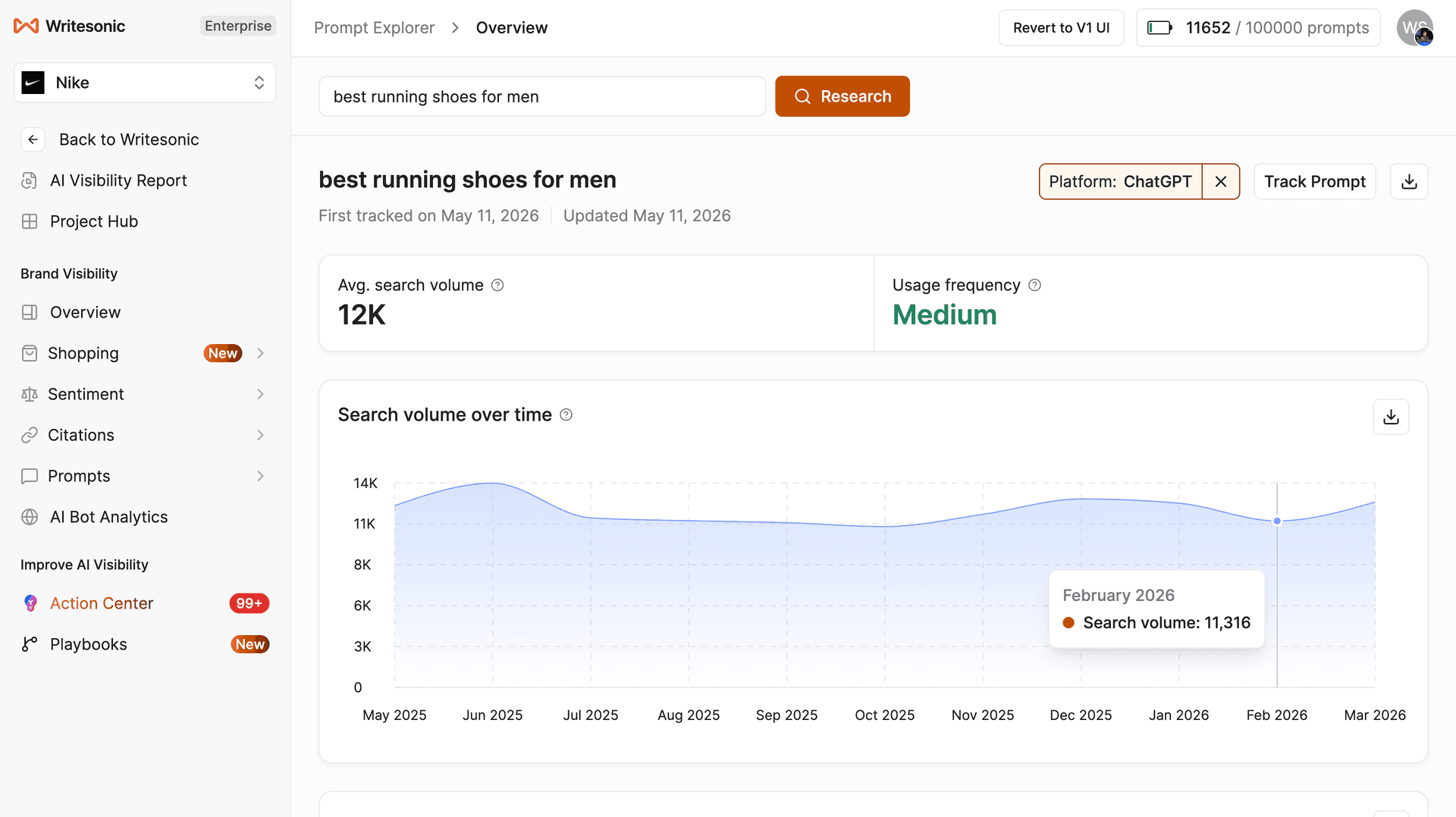
Profound is the clearest published price anchor in the category, and also the easiest place to overspend if your prompt list is still fluid. The Starter plan costs $82.50 per month when billed annually for 50 prompts, while the Growth plan costs $332.50 per month billed annually for 100 prompts, and there is no free trial, only demos.
Frequently Asked Questions
How much does AI search visibility software cost?
Entry tools start around $99 per month, although some annual plans come in lower, such as Profound’s Starter at $82.50 per month billed annually for 50 prompts. Full enterprise suites like Similarweb AI Search Intelligence typically run in the mid four to low five figures per month, depending on prompt volume and competitive sets. Otterly.ai and Semrush usually sit below that tier.
How do I measure ROI on AEO and GEO?
Tie tracked AI citations back to referral traffic and assisted conversions, then compare those shifts before and after content changes. Similarweb Digital Intelligence and Similarweb AI Search Intelligence connect citation lift to traffic share, and Google Analytics can sit on top for conversion and revenue analysis.
Should I budget AEO separately from SEO?
Most teams run AEO and GEO inside the SEO budget, but with separate KPIs such as citation share, share of voice, prompt coverage, and AI sentiment. A unified suite like Similarweb AI Search Intelligence keeps those metrics in one place, while tools such as Otterly.ai or Semrush can cover the lighter monitoring layer.